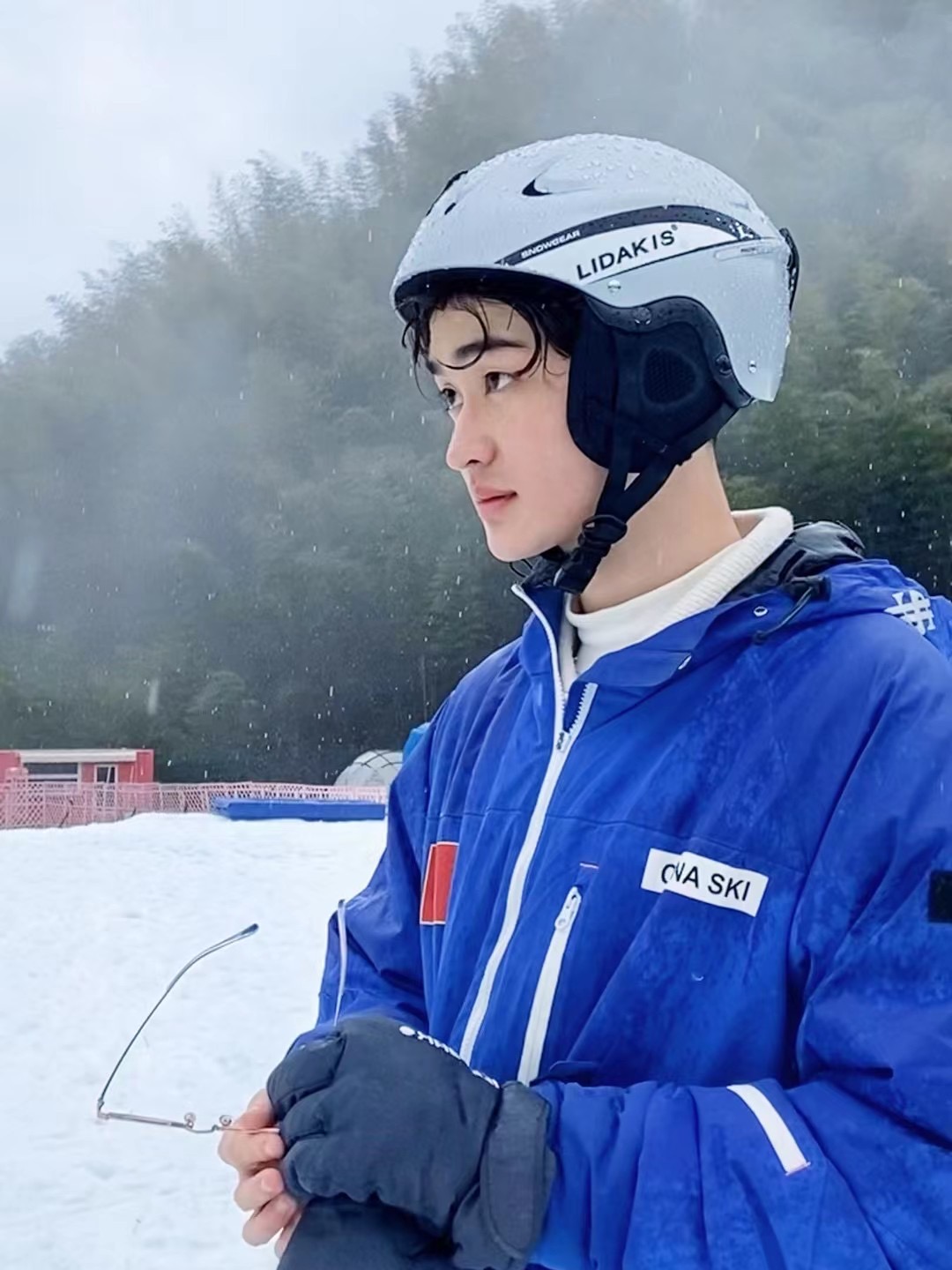
I am currently a second-year master's student in Robotics at GRASP Lab. My research experience includes contributing to robot planning and control under uncertainty at the UPenn Figueroa Robotics Lab with Prof. Nadia Figueroa, and developing a teleoperation forklift system at the UPenn xLab with Prof. Rahul Mangharam. Recently, I developed an uncertainty-aware MPPI framework accelerated with JAX for 100 Hz online replanning under noisy vision and disturbances.
Previously, I also gained significant experience in sensor fusion and autonomous robot vehicles, including developing a Doppler radar-based speed detection system and line-following robot vehicles during my undergraduate studies at the University of Nottingham Ningbo China (UNNC), as well as designing and building a teleoperated robot with multimodal sensors at UPenn.
My primary research interests lie in robot learning, optimal control and uncertainty-aware decision-making, focusing on learning-based motion planning, control, and perception. I aim to develop generalizable and uncertainty-aware frameworks that integrate learning, perception, and control to achieve safe, robust, and adaptive robotic autonomy in complex real-world environments.
Uncertainty-Aware MPPI Planning and Control for Robust Robotic Tasks Research Assistant at Figueroa Robotics Lab, advised by Prof. Nadia Figueroa
1. Built an MPPI-based stochastic planning and control framework for online replanning and obstacle avoidance under perception uncertainty and environmental disturbances, optimized for real-time execution via parallel rollouts.
2. Integrated YOLO-based perception and injected detection uncertainty into MPPI instead of point estimates.
3. Modeled two complementary uncertainty sources to improve robustness and safety:
(i) Spatial uncertainty: modeled target position as a distribution to guide MPPI toward the belief, not a single detection;
(ii) Detection confidence: weighted the cost by YOLO confidence to avoid high-uncertainty regions.
4. Added risk-averse and exploration costs to trade off safety and information gathering in uncertain environments.
5. Accelerated sampling and cost evaluation with JAX and maintained a stable 100 Hz control loop; experiments showed reliable planning and execution under glare/occlusion, missed detections, and increased noise, improving tracking accuracy and reducing failure rates.
Penn Robotics Pick-and-Place Challenge (Champion) — Dynamic Pick-and-Place Control System (Sep 2025 – Dec 2025) Team Leader, Group Project
1. Built an end-to-end pick-and-place system for a Franka Panda 7-DoF arm by deriving the kinematic model with DH parameters and implementing FK, Jacobian, and IK for autonomous grasping and stacking in a shared workspace.
2. Implemented AprilTag-based 6-DoF pose estimation and calibrated camera–end-effector–base transformations; applied bias compensation to improve real-robot localization stability.
3. Designed grasping and stacking strategies for both static and dynamic targets:
(i) Static grasping: coarse-to-fine detection + orientation selection; used 7-DoF redundancy to keep a stable wrist pose.
(ii) Dynamic capture: Jacobian-based joint-space sweeping with event-triggered grasping when the target enters a range.
4. Built a ROS-based sim/execution pipeline with RViz visualization and debugging, and deployed the same planning/control stack on the real Franka for reliable sim-to-real transfer.
5. Validated the system in both simulation and real hardware under perception noise and dynamic disturbances, winning the UPenn Pick-and-Place Challenge.
Read more
MPC-Based High-Speed Dynamic Juggling with a Franka Panda Control & Optimization Project, advised by Prof. Michael Posa (Sep 2025 – Dec 2025)
1. Built a MuJoCo simulation for high-speed Franka Panda juggling with ball flight prediction + contact modeling for capture and sustained juggling.
2. Designed a three-layer control stack:
(i) High-level: choose contact timing and target paddle normal/impact velocity to meet apex + region constraints.
(ii) Mid-level: IK/velocity-IK + joint-space MPC (terminal constraints) to generate smooth, feasible reference trajectories.
(iii) Low-level: torque tracking via joint-space PD + gravity compensation for stable execution.
3. Ran the full system in a 100 Hz closed loop and achieved smooth tracking; across diverse initial ball states, the robot stabilized the ball into a target region within 3–5 seconds and maintained periodic juggling.
Read more
Teleoperated Forklift System Integration Research Assistant at xLab, advised by Prof. Rahul Mangharam
1. Utilized the CAN protocol to establish communication between the Jetson and the forklift.
2. Built Bluetooth communication to translate joystick inputs on the Jetson to forklift control commands.
3. Achieved full remote forklift control including driving, steering and lifting.
4. Designed and fabricated a 3D-printed and laser-cut chassis to mount the Jetson, power system, and communication hardware and a stable top-mounted camera system to support teleoperation perception.
Read more
Teleoperation Robot Design and Competition Project Team Leader, Group Project
1. Developed a 3-DOF teleoperated robot using Itsy Bitsy and Arduino for precise servo control.
2. Designed the Waldo system for smooth teleoperation, including servo selection and custom coding.
3. Led the full development cycle across mechanical, circuit, and software design.
4. Integrated sensors (ultrasonic, IR, force) for obstacle detection and environmental interaction.
5. Optimized control algorithms with PID and custom logic to boost efficiency and accuracy.
Read more
Multi-Sensor Fusion Odometry on Uneven Terrain Research Assistant at UNNC, advised by Prof. Adam Rushworth
1. Designed a robust odometry pipeline for wheeled robots on uneven terrain to mitigate vibration- and slip-induced drift.
2. Fused LiDAR, camera, and IMU measurements with a Kalman filter to reduce motion- and slip-related localization errors.
3. Calibrated and benchmarked odometry using AprilTag-based pose estimates as an external reference.